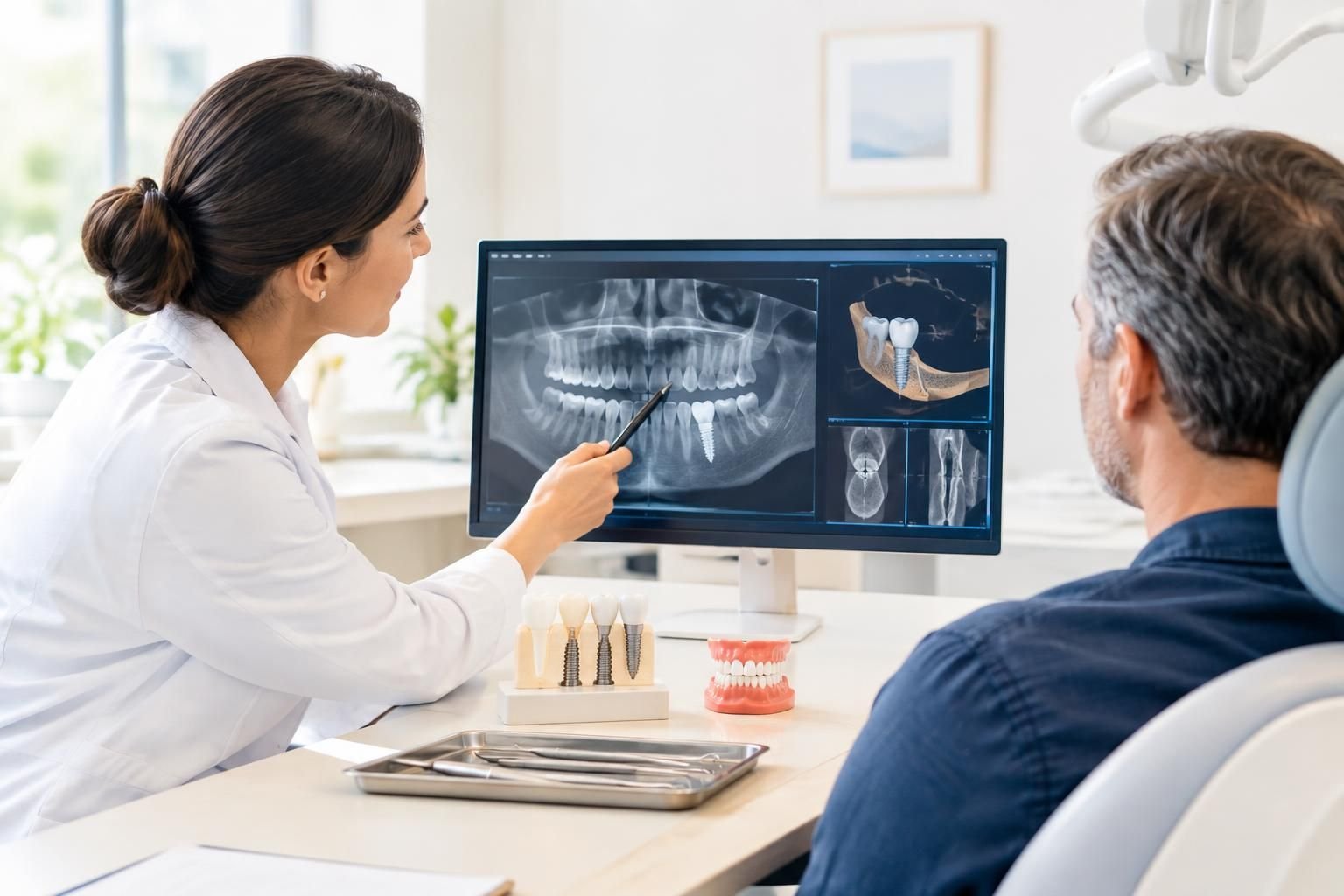
Advanced dental implant techniques are modern planning, surgical, and restorative methods that make implant treatment more precise, better timed, and more adaptable to complex cases. They don't replace sound diagnosis or basic surgical principles, but they can improve decisions about where an implant goes, whether bone support is adequate, how healing is managed, and when the final or temporary tooth can be attached. If you've already heard about CBCT scans, guided surgery, bone grafting, or same-day teeth, this article connects those pieces into one practical treatment journey. You'll see where newer techniques help, where they have limits, and what questions are worth asking before treatment begins.
What Advanced Dental Implant Techniques Include
Advanced dental implant techniques include digital diagnostics, guided placement, bone and soft tissue preparation, improved implant surfaces, and carefully selected faster restoration protocols. In conventional implant placement, the clinician may rely more heavily on two-dimensional X-rays, manual measurements, and direct surgical judgment during the procedure. Advanced implantology adds more planning data before surgery and often uses custom tools to transfer that plan into the mouth.
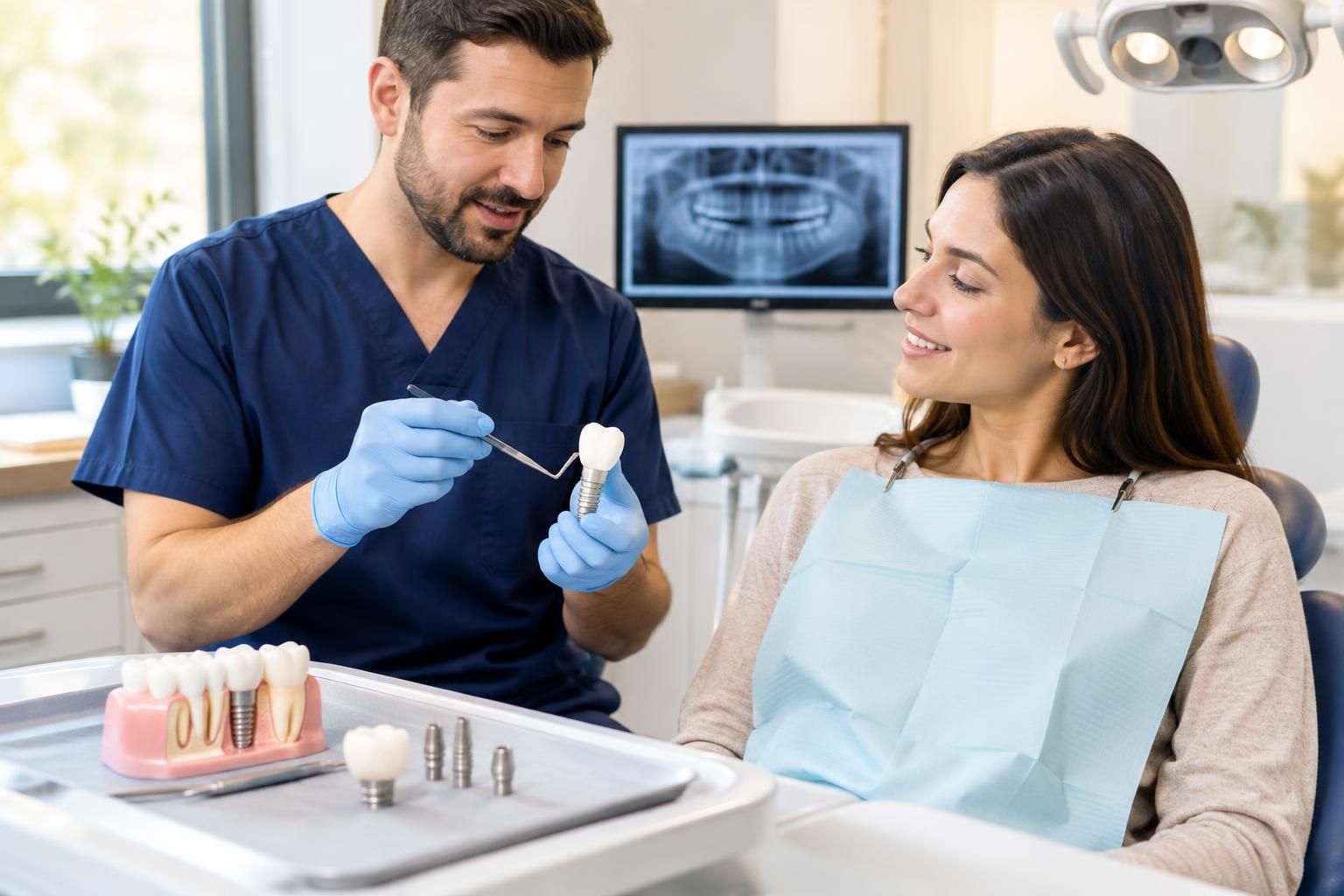
That doesn't mean “advanced” is automatically better for every patient. A straightforward single implant in healthy bone may not need every technology available. But when anatomy is tight, bone volume is reduced, several teeth are missing, or the final bite needs careful coordination, these techniques can make the plan more predictable. If you're still clarifying the basics, understanding dental implant parts helps make the newer methods easier to follow.
| Technique | Main purpose | Best suited for | Key limitation |
|---|---|---|---|
| CBCT and digital planning | 3D diagnosis and position planning | Complex anatomy or multiple implants | Still depends on clinical judgment |
| Guided implant surgery | Transfers the digital plan to surgery | Precise angulation and depth control | Guide fit must be accurate |
| Bone grafting procedures | Rebuilds or preserves bone support | Low jawbone density or bone loss | Adds healing time |
| Immediate loading | Adds a temporary tooth quickly | Strong primary stability cases | Not safe for every bite or bone type |
The newest techniques usually combine several methods rather than relying on one breakthrough procedure. For example, a patient may have a CBCT scan, intraoral scanner records, digital treatment planning software, a surgical guide, and a temporary restoration designed before the implant is placed.
Digital Planning and Guided Implant Placement
Digital planning and guided implant placement use 3D imaging and computer-designed guides to improve implant position, angle, and depth. A CBCT scan shows bone dimensions, nerve location, sinus anatomy, and jaw structure in three dimensions. An intraoral scan captures teeth and gums so the implant can be planned around the future crown, not just available bone.
This restoratively driven approach plans backward from the final crown, abutment position, bite forces, and gum contour. It is especially useful in visible areas, tight spaces, and full-arch treatment. A complete implant planning process also considers health history, medications, periodontal status, and treatment timing.
Guided surgery uses a custom guide on teeth, gums, or bone to direct the drill path. It can reduce guesswork and support minimally invasive access, but accuracy still depends on scan quality, guide stability, planning, and surgical skill. Robot-assisted systems offer real-time guidance in some practices but do not replace clinical judgment. Even in a simple single-tooth case, success depends on precise data, careful execution, and appropriate anatomy.
Bone Grafting and Ridge Preservation for Implant Readiness
Bone grafting and ridge preservation help create enough support for an implant in the right position. After tooth loss, the jaw ridge naturally changes shape, and the ideal implant site may no longer have enough width or height. Placing an implant into poor bone can compromise both surgery and the final restoration.
Socket preservation is a common first step. If a tooth is removed and the implant will not be placed right away, graft material may be added to the socket to reduce ridge collapse. Ridge augmentation adds width or contour to a deficient ridge, and a sinus lift creates room for implants in the upper back jaw.
Some grafts are combined with membrane barriers to maintain space while new bone forms. PRP or PRF may be used to support healing, but they do not replace adequate bone volume or good technique. Soft tissue management may also improve gum thickness and shape around the future implant. Sometimes treatment is staged so grafting heals before implant placement. Grafting does not mean the plan failed. Often, it is what makes the implant safer and more realistic.
Surface Technology and Osseointegration
Surface technology is intended to improve how bone cells interact with an implant during osseointegration. Osseointegration is the process in which bone forms close contact with the implant surface, creating stable support for the abutment and crown.
Most implants are titanium, though zirconia may be used in selected cases. Surface modifications such as sandblasting, acid etching, plasma spraying, nano-surface treatment, and bioactive coatings change the implant’s microscopic texture or chemistry. The goal is to encourage early cell attachment, bone remodeling, and long-term stability.
These features matter, but they do not act alone. Osseointegration also depends on primary stability at placement, bone quality, surgical technique, infection control, and how soon chewing forces are applied. Some clinicians use implant stability quotient measurements to help guide loading decisions.
Material choice also affects the restoration system. Implants, healing abutments, custom abutments, and crowns each serve different roles, and titanium zirconia and crowns helps explain how those choices fit together. Even the best surface cannot overcome smoking, poor hygiene, periodontal disease, or overload.
Immediate Loading and Same-Day Options
Immediate loading means attaching a temporary restoration soon after implant placement, but only when stability, bone quality, and bite conditions allow it. The phrase same-day teeth can be misleading because the tooth or bridge placed that day is usually temporary, not the final restoration.
A safe protocol depends on strong primary stability, favorable implant position, adequate bone density, no active infection, and careful control of chewing forces. A front tooth may get a non-chewing temporary crown for appearance, while a full-arch case may receive a temporary bridge if several implants are stable.
Same-day treatment is not right for everyone. Bruxism, uncontrolled diabetes, smoking, active periodontal disease, or poor bone may require a slower staged plan. Delaying the crown can protect osseointegration when micromovement risk is too high.
In simple terms, immediate placement is putting the implant in at extraction, immediate loading is attaching a temporary tooth quickly, and same-day teeth may involve one or both. Final restorations usually wait for healing. A realistic implant healing timeline matters more than a promise of speed.
Minimally Invasive Surgery and Recovery
Minimally invasive implant surgery reduces tissue disruption while preserving safe access and control. Flapless placement is a common example. Instead of raising a larger gum flap, the implant goes through a small tissue opening, often with a surgical guide. When anatomy is favorable, this can mean less swelling, fewer stitches, and an easier early recovery.
Good candidates usually have enough bone width, healthy gums, controlled medical conditions, and CBCT-based planning. Minimally invasive does not mean minimal planning. Because the surgeon sees less bone directly, accurate imaging, guide fit, and case selection matter even more. If anatomy is unclear or the guide is unreliable, the clinician may switch to an open approach.
Recovery depends on what was actually done. A simple guided implant heals differently from ridge augmentation or a sinus lift. Patients are usually told to protect the site, follow medications, keep the mouth clean, avoid aggressive brushing over the area, and return for follow-up visits. Common mistakes include chewing too hard on a temporary tooth, smoking during healing, skipping reviews, and assuming low pain means the implant is ready for full function.
Success Rates, Risks, and Long-Term Maintenance
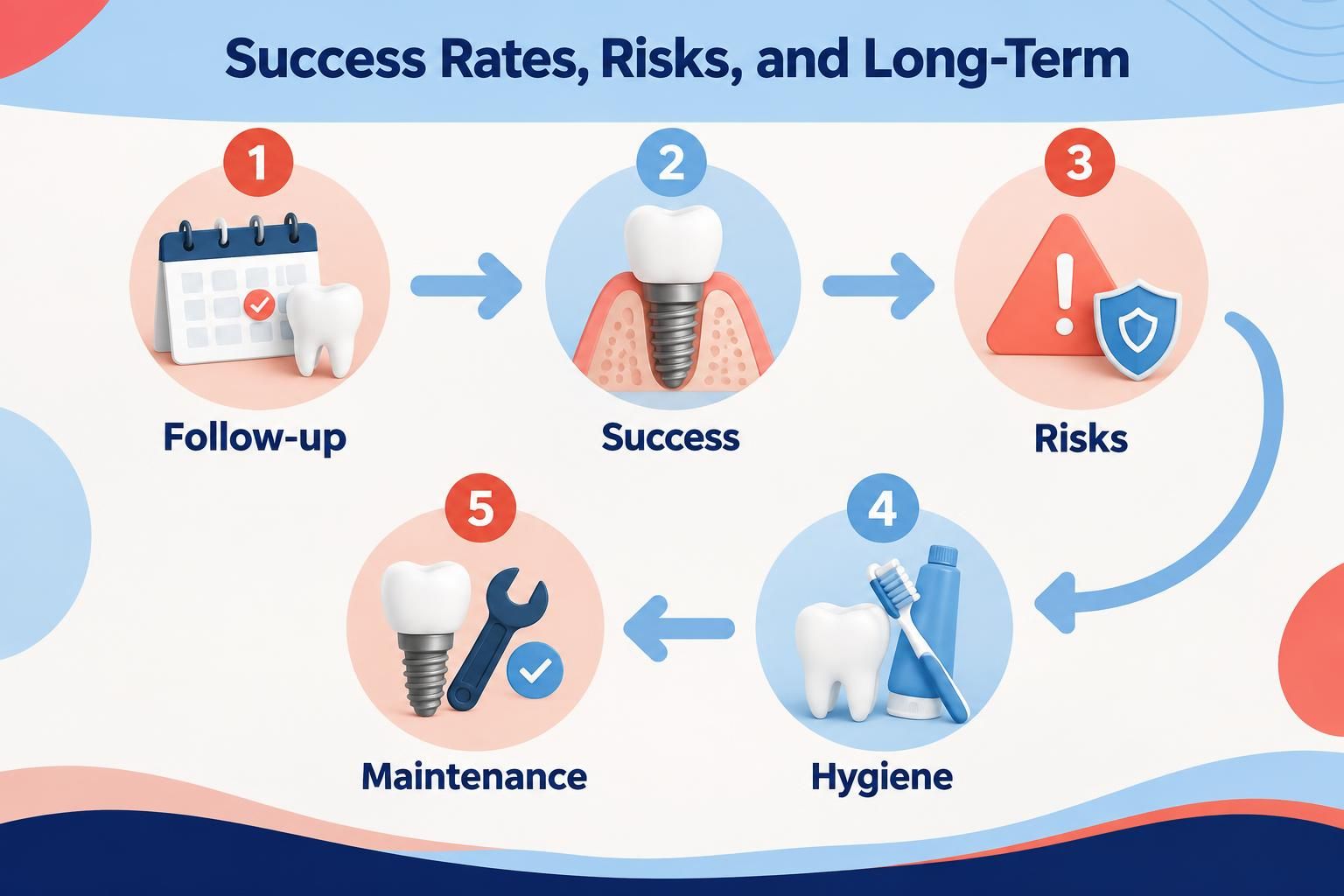
Advanced implant techniques can be highly predictable, but success still depends on case selection, risk control, hygiene, and follow-up. There is no single success rate for every implant because outcomes vary with bone quality, surgical complexity, systemic health, restoration design, and maintenance. A straightforward single implant and a grafted full-arch case do not carry the same risks.
Age alone rarely rules implants out. A healthy older adult may be a better candidate than a younger patient with uncontrolled diabetes, heavy smoking, bruxism, or active periodontal disease. The real issue is whether the patient can heal, keep the area clean, attend reviews, and tolerate the procedure.
Common causes of failure include infection, poor osseointegration, excessive bite forces, peri-implantitis, bone loss, and restoration problems. Peri-implantitis involves inflammation and bone loss around an implant and is often linked to plaque control, gum health, smoking, and missed maintenance. Bleeding, swelling, looseness, bad taste, pain, or exposed threads should be checked promptly, and implant warning signs can help guide that conversation.
Long-term maintenance is simple but consistent. Clean around the crown, under bridges, and near the gumline with the tools recommended for your restoration. Professional visits help monitor bite forces, screw stability, gum condition, and early bone loss. Good cleaning around implants remains one of the best protections for advanced treatment.