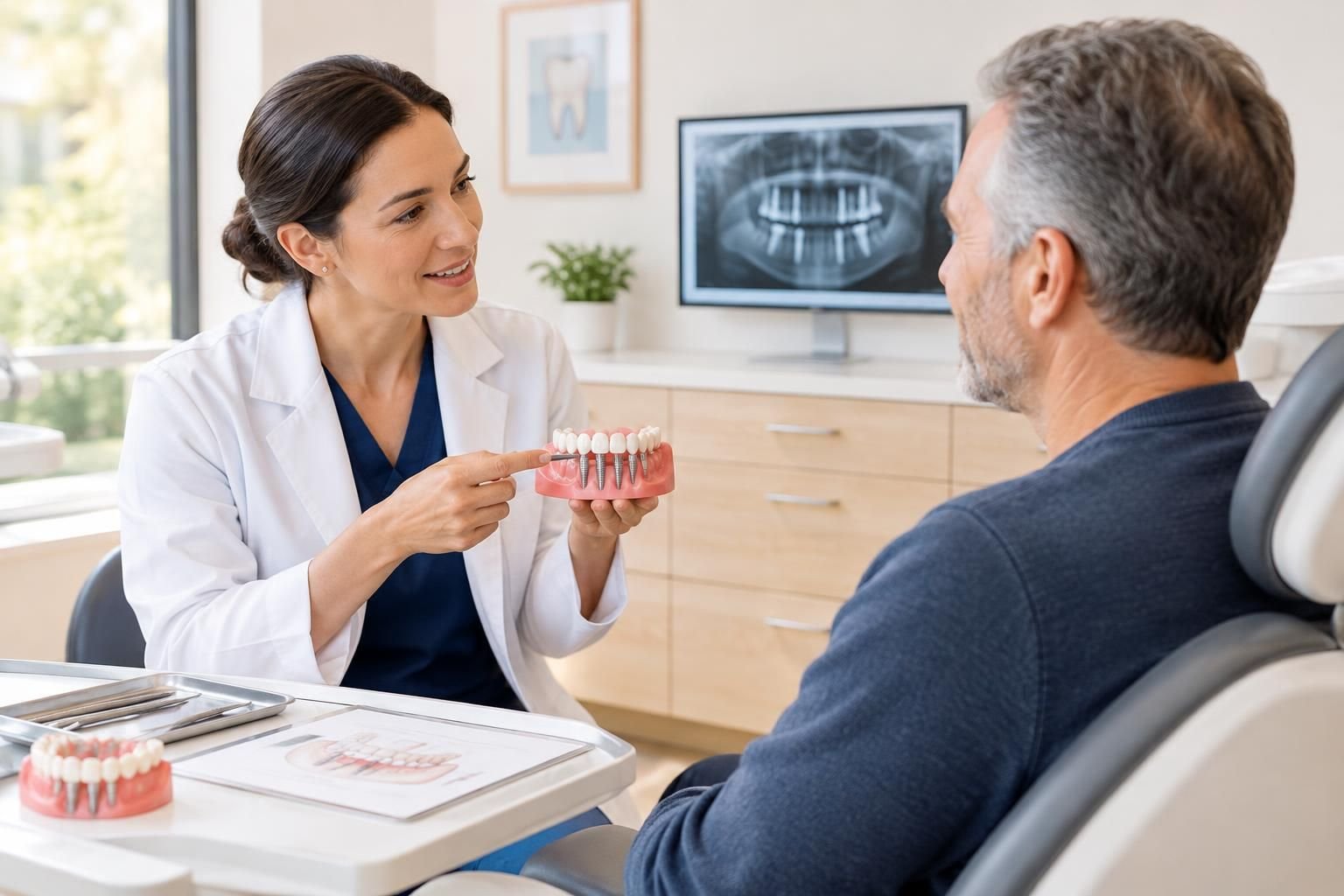
4 and 1 dental implants usually mean a full-arch fixed bridge held by four implants—the concept often branded as All-on-4. All-on-X is broader: four, five, six, or more implants, depending on bone, bite, and anatomy.
Scope | General planning range One arch | $15,000–$35,000
These aren't quotes; pricing varies by market, provider, scope, condition, materials, lab work, and availability, so confirm current pricing. An edentulous upper arch may qualify; major bone loss may require grafting first.
What 4 and 1 Dental Implants Are
“4 and 1 dental implants” usually refers to one full-arch prosthesis supported by four dental implants. In practical terms, four titanium implant posts are placed in the jawbone, then abutments connect them to a fixed prosthetic bridge that replaces an entire upper arch or lower arch.
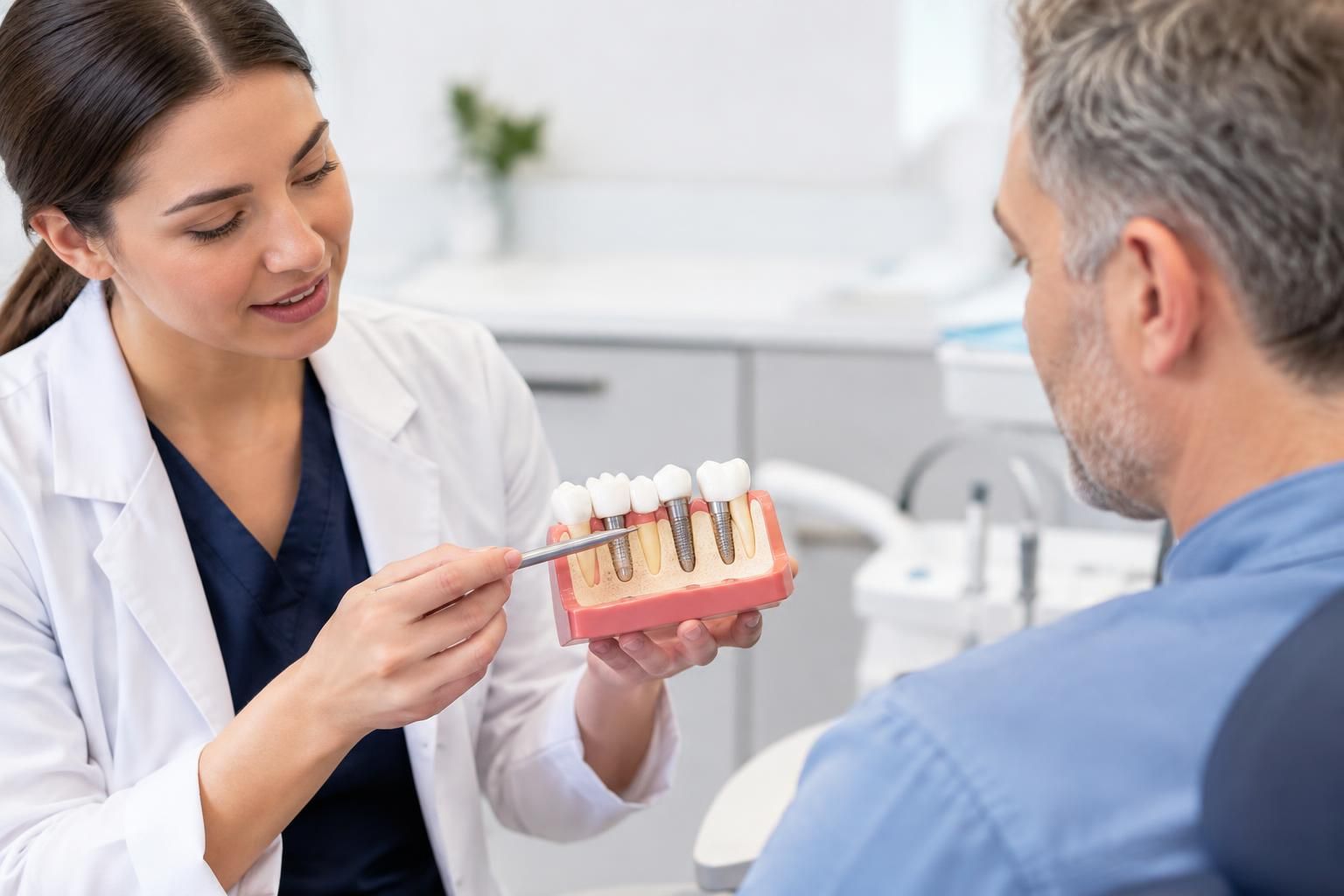
It’s closely related to All-on-4, which is a specific four-implant full-arch concept. All-on-X is the broader term dentists use when the plan may need four, five, six, or more implants. So if someone says “4 and 1,” ask whether they mean a fixed All-on-4-style bridge or a different full-arch treatment plan.
Who is a Good Candidate
A good candidate has an edentulous arch or failing teeth, enough jawbone volume to stabilize four implants, and gum tissue healthy enough to control infection. Age alone usually isn’t the deciding factor; medical stability, healing capacity, hygiene, and follow-up matter more.
You’ll need a CBCT scan to check bone density, nerve and sinus position, and whether the upper arch or lower arch can support the plan. If you’ve had bone loss from periodontal disease, you may still qualify, but bone grafting or a sinus lift may be needed first.
Smoking, uncontrolled diabetes, active gum infection, and severe bruxism can raise the risk of implant failure.
How the Procedure Works
Planning and Imaging
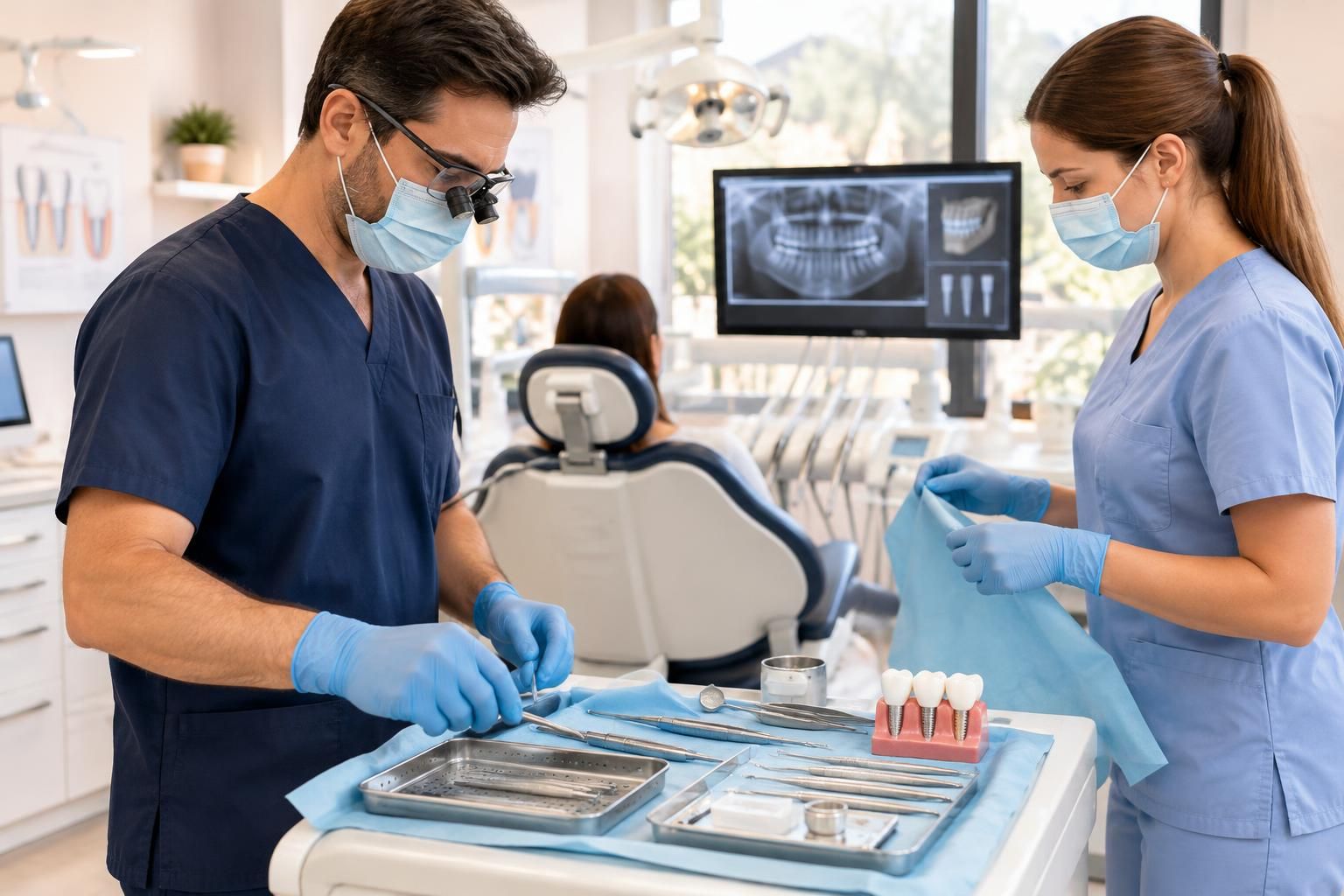
The planning visit is where the team decides whether four implants can safely support a full-arch prosthesis and where each dental implant should sit. A CBCT scan gives 3D imaging of the jawbone, sinus spaces, nerves, and available bone density; digital impressions help design the prosthetic bridge so the bite, smile line, and speech space aren’t guessed.
An oral surgeon, periodontist, or prosthodontist may be involved, especially if you have bone loss, periodontal disease history, or an upper arch that may need bone grafting or a sinus lift. This stage also determines whether the case is closer to classic All-on-4 or a broader All-on-X plan with more implants.
Implant Placement and Temporary Teeth
Surgery is usually done with local anesthesia, often with sedation dentistry if you’re anxious or having extractions the same day. The remaining failing teeth are removed if needed, the implants are placed in the planned positions, abutments are attached, and a temporary denture or fixed temporary bridge is connected when the implants have enough initial stability.
Many patients leave with temporary teeth the same day, but they’re not the final teeth. During the healing period, osseointegration allows titanium implants to fuse with the jawbone. After several months, the temporary is replaced with a stronger permanent restoration, often acrylic, zirconia, or a hybrid design, followed by bite adjustment.
Cost, Financing, and Insurance
Expect 4 and 1 dental implants to cost about $15,000–$35,000 per arch in the U. S., though complex cases can cost more.
Before comparing quotes, check implant count, temporary teeth, final bridge material, extractions or grafting, sedation, follow-up visits, and repair or remake terms.
| Cost item | Typical range | What it usually includes | Watch-outs |
|---|---|---|---|
| Single full arch | $15,000–$35,000 | Four implants, abutments, fixed temporary, final bridge | Materials and surgeon fees vary |
| Both arches | $30,000–$70,000 | Upper and lower full-arch treatment | Bite redesign adds cost |
| Zirconia final bridge | $5,000–$15,000 extra | Stronger permanent restoration | Not always in base quote |
| Extractions/grafting | $300–$5,000+ | Tooth removal, bone grafting, sinus lift if needed | Bone loss changes scope |
These are planning ranges, not guaranteed quotes. They reflect common provider and package patterns, and readers should verify current pricing, scope, deliverables, and market conditions before purchase.
These are planning ranges, not guaranteed quotes. Verify current pricing, scope, deliverables, and market conditions before purchase.
Dental insurance often excludes implants or caps benefits, but it may help with extractions or sedation. Ask about financing, in-house payment plans, or third-party medical credit.
Benefits and Possible Downsides
Stability and Function
A fixed full-arch prosthesis usually feels more secure than a removable denture because the prosthetic bridge is anchored to dental implants rather than resting on gum tissue. That can improve chewing efficiency, especially with foods that make dentures shift, like sandwiches, cooked meats, or crisp vegetables after healing.
You also don't remove the bridge at night, which many patients prefer socially and psychologically. For someone comparing a fixed bridge on implants with a removable denture, the biggest practical difference is stability: less movement, fewer sore spots, and more confidence biting in public.
Risks, Speech Changes, and Maintenance
Fixed teeth are not maintenance-free. Food can collect under All-on-4-style bridges, especially near the back or along the gumline, so daily cleaning is essential. You may need a water flosser or oral irrigator, an interdental brush, and other tools your dentist recommends.
Possible downsides include temporary speech changes, bite adjustment visits, prosthesis wear, screw loosening, peri-implantitis, and implant failure. Bruxism increases overload risk, so a night guard may help. Long-term success depends on plaque control, regular follow-up visits, and catching small problems before they become expensive ones.
Recovery, Aftercare, and Long-term Results
Recovery usually starts with swelling, bruising, and soreness for several days, then a longer healing period while osseointegration takes place. Many patients follow a soft-food diet for several weeks; think eggs, fish, yogurt, pasta, and tender cooked vegetables, not crusty bread, nuts, or steak.
Cleaning matters because food can get trapped under a full-arch prosthesis. Your routine may include a water flosser or oral irrigator, interdental brush, angled floss threaders, and professional maintenance visits.
With good hygiene, stable bone, controlled bite forces, and regular checks, implants can last decades, though the acrylic, zirconia, or titanium prosthetic bridge may need repair or replacement over time.
Alternatives to Consider
Alternatives depend on whether your priority is cost, avoiding surgery, easier cleaning, or maximum stability.
- Removable denture: usually the least invasive and lowest-cost option, but it can move, reduce chewing efficiency, and may need relines as the jawbone changes.
- Implant overdenture: snaps onto two or more implants, offering better retention than a conventional denture while still being removable for cleaning.
- All-on-X: uses more than four implants when bone quality, bite force, or arch shape makes extra support useful.
- Bone grafting first: may make fixed implant treatment possible later if bone loss is the main barrier.
For some patients, especially those with medical risks or tighter budgets, removable teeth are the more practical choice.
4 and 1 dental implants can work well if you want fixed full-arch teeth and have the bone support, hygiene habits, and budget to maintain them. The right choice depends on bone quality, bite forces, health risks, cleanability, and comfort with surgery.