
Your after dental implant diet should change as tenderness, swelling, and chewing comfort change. Right after surgery, the goal is to protect the implant site, keep bleeding controlled, and avoid anything that could disturb the clot or irritate the tissue. Then you’ll move through a soft-food diet before slowly adding more texture. Your dentist’s instructions come first, especially if you had a bone graft or multiple implants, but this timeline gives you a practical way to plan meals from day one through the return to normal eating.
First 24 to 48 Hours After Surgery
The first 24 to 48 hours should focus on cool liquids and very soft foods that need little or no chewing. This helps reduce irritation while swelling and soreness are often highest. Rest, hydrate, and follow medication instructions. healing timeline explains this protective phase.
Best Cool Liquids and Very Soft Foods
Good first-day choices include water, yogurt, applesauce, pudding, custard, cool broth, protein shakes, and spoon-thick smoothies. Keep foods cool or room temperature, not hot.
What to Avoid Right Away
Avoid hot drinks, alcohol, crunchy foods, sticky foods, seeds, spicy foods, and acidic items. Do not use a straw, and avoid chewing on the implant side.
Soft-Food Phase for the First Week
The first week usually works best with soft, moist foods that provide enough calories and protein without making you chew hard. Think of this as controlled eating, not just “mushy food.”.
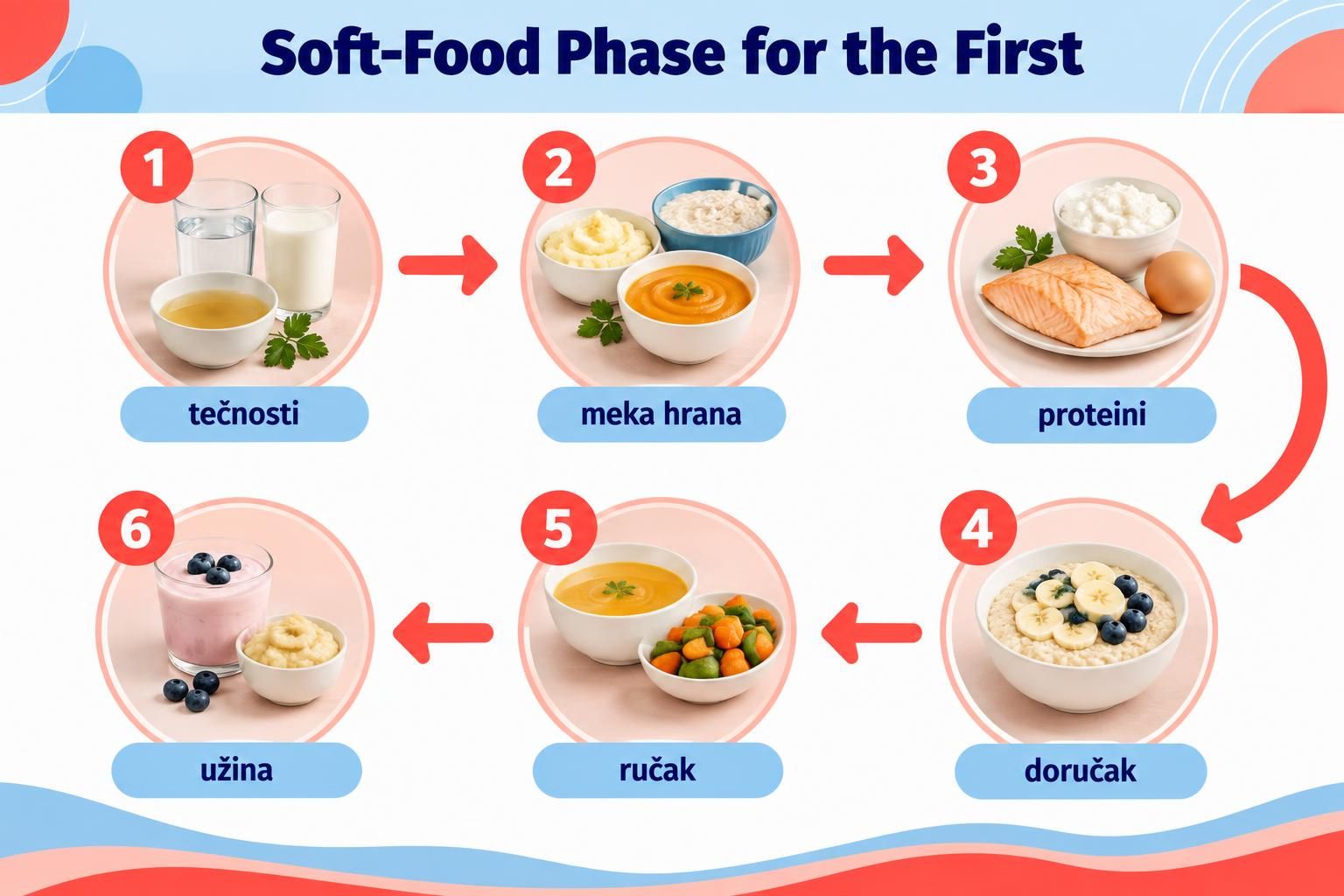
Your meals should be easy to rinse away and gentle around the surgical area. Time meals so you can follow your dentist’s oral hygiene instructions afterward without aggressive swishing or brushing near the implant site.
| Meal | Good options | Practical note |
|---|---|---|
| Breakfast | Oatmeal, scrambled eggs, yogurt | Let warm foods cool first |
| Lunch | Blended soups, mashed potatoes, cottage cheese | Avoid seeds and tough skins |
| Dinner | Soft fish, mac and cheese, scrambled tofu | Chew away from implant |
| Snacks | Applesauce, pudding, ice cream, soft fruits | Choose smooth textures |
Protein-rich Meal Ideas
Protein supports tissue repair, so include it often. Good options include scrambled eggs, Greek-style yogurt, cottage cheese, soft fish, tofu, protein shakes, and smooth lentil soup.
Easy Breakfast, Lunch, and Snack Options
Try oatmeal, yogurt, scrambled eggs, mashed potatoes, blended soup, soft fish, applesauce, banana, avocado, pudding, or a smooth meal replacement drink.
Weeks 2 to 4: Gradually Reintroducing More Texture
Weeks 2 to 4 often allow slightly firmer foods if chewing is comfortable and your dentist has not restricted your diet. Increase pressure gradually, not quickly.
Osseointegration takes longer than gum soreness to settle, so do not treat the implant like a fully healed tooth yet. For context, see dental implant parts.
How to Test Foods Safely
Test one food at a time. Start with something soft but slightly firmer, like pasta or flaky fish. Take small bites, chew on the opposite side, and stop if you feel sharp pain, pressure, bleeding, or pulling near the implant.

Foods and Habits That Can Disrupt Healing
Healing problems often come from pressure, suction, irritation, and poor cleaning around the site. Many people do too much once they feel better. Gentle chewing and consistent cleaning around dental implants help reduce irritation and protect the area.
Hot, Crunchy, Sticky, and Acidic Items
Avoid very hot drinks, chips, nuts, popcorn, hard toast, sticky candy, chewy bread, citrus, and tomato-heavy sauces early on. These can irritate tissue or get trapped near the site.
Straws, Smoking, Alcohol, and Chewing Near the Implant
Avoid straws, smoking, and alcohol during early healing. Chew on the opposite side until your dentist says otherwise to protect the implant area.
Nutrition Tips That Support Implant Recovery
A recovery-friendly diet focuses on protein, vitamin C, calcium, hydration, and regular meals. Soft options like eggs, tofu, yogurt, cottage cheese, and soft fruit work well. If your appetite is low, try smaller meals more often. Keep oral hygiene gentle and consistent after eating.
When You Can Eat Normally Again
You can usually return toward normal eating when chewing feels comfortable, swelling has improved, and your dentist confirms healing is on track. Recovery varies by implant number, grafting, bite, and health.
Bring back solid foods gradually. Soft rice may feel easier than bread, and tender fish easier than steak. Avoid hard biting, sticky pulling, or heavy chewing. single tooth vs. multiple tooth implant explains why plans differ.
Signs Your Implant is Healing Well and When to Call the Dentist
Healthy healing means swelling and soreness gradually improve, bleeding stays light, and the area feels better each day. Mild tenderness is normal, but the trend should be improvement, not worsening.
Call your dentist if pain increases, swelling worsens after a few days, bleeding continues, or you notice pus, fever, a bad taste, looseness, or pressure when biting. These can signal infection or irritation. If you’re comparing symptoms, implant warning signs can help.
Start with cool, very soft foods, then move to soft, protein-rich meals through the first week. Add texture only when chewing feels safe.