
An abutment for a dental implant is the small connector that joins the implant fixture in your jawbone to the visible replacement tooth, usually a crown, bridge, or denture. Think of the implant fixture as the foundation, the crown as the finished tooth, and the abutment as the part that lets those two pieces work together. If you're between implant surgery and final crown placement, this is often the stage that feels most confusing. You'll want to know why it's needed, when it's placed, whether it hurts, and what choices actually matter.
What an Implant Abutment Does
An implant abutment creates the connection between the implant fixture below the gums and the final crown or prosthetic tooth above it. After osseointegration, it provides a stable, shaped transition for the restoration.
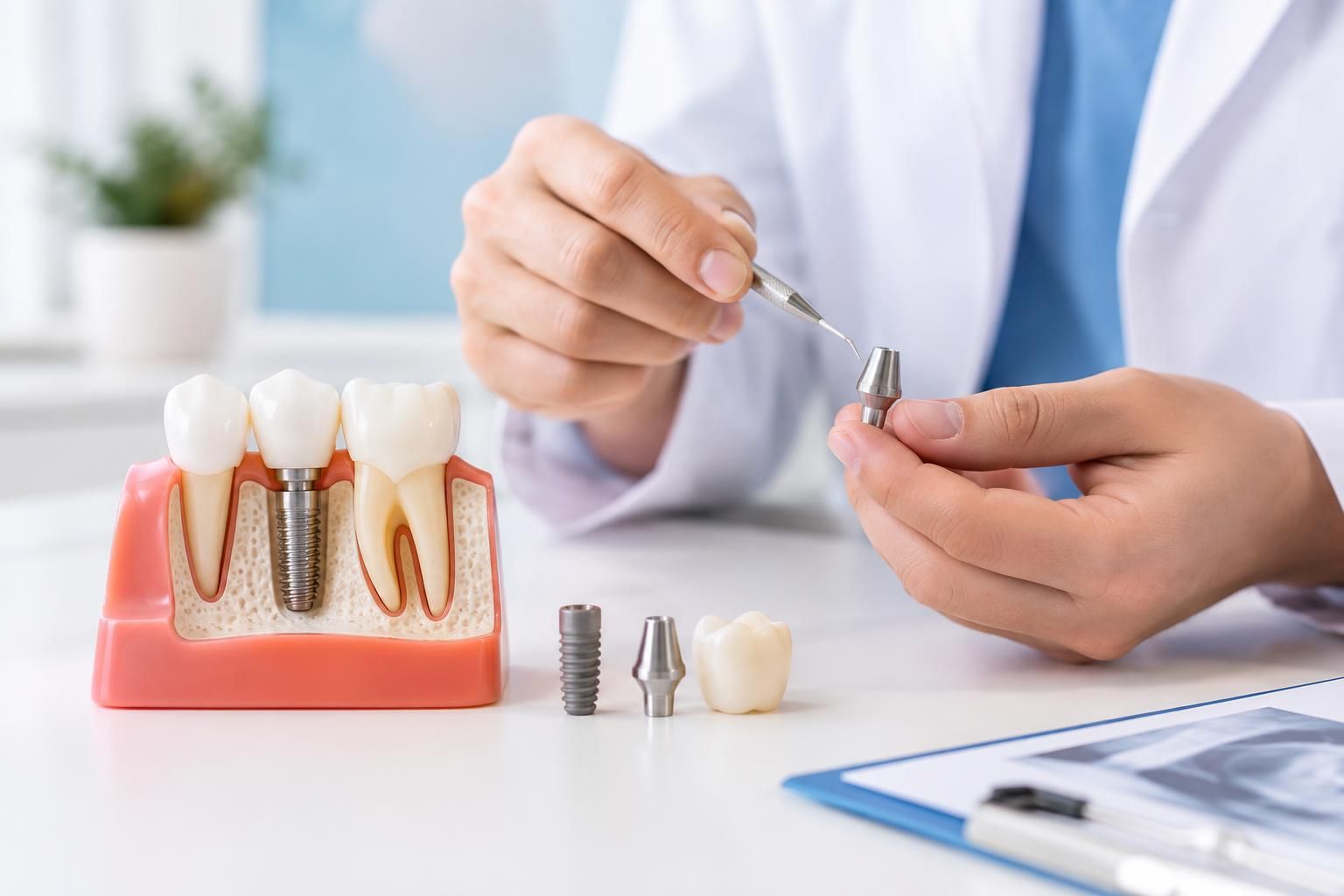
Some systems use a separate abutment, while others combine parts differently. For the bigger picture, review the basic parts and purpose of a dental implant.
Types of Dental Implant Abutments
Dental implant abutments vary by purpose, shape, fit, and material. The right choice depends on your gum tissue, bite, implant angle, and final restoration. A back molar may need strength and simple access, while a front tooth often needs shaping for esthetics.
Straight abutments line up directly with the implant. Angled abutments help when implant position does not match the ideal crown position. Titanium is often chosen for strength, while zirconia may help when a tooth-colored appearance matters near thin gum tissue.
| Abutment type | Main use | Best fit | Key trade-off |
|---|---|---|---|
| Healing abutment | Shapes gum tissue | Temporary healing stage | Not the final tooth support |
| Permanent abutment | Supports final crown | Crown, bridge, or denture | Must match bite and restoration |
| Stock abutment | Standard prefabricated fit | Simple, well-aligned cases | Less personalized emergence shape |
| Custom abutment | Designed for your case | Front teeth or complex gum contours | More planning and lab work |
Healing Vs. Permanent Abutments
A healing abutment, sometimes called a healing cap, protects the implant opening and guides gum tissue while the area heals. A permanent abutment is the final connector that supports the crown, bridge, or denture.
Stock Vs. Custom Abutments
A stock abutment is prefabricated and works well in straightforward cases. A custom abutment is made from a scan or impression to improve shape, tissue support, and crown emergence.
How Abutment Placement Works
Abutment placement usually involves accessing the implant, attaching the abutment, and preparing for the crown. If a healing abutment is already visible, the dentist may replace it with the permanent one, tighten the screw, and take an impression or digital scan. implant planning helps reduce surprises.
Timing After Implant Surgery
The abutment may be placed during implant surgery or after osseointegration. Timing depends on stability, bone and gum conditions, healing, and the overall restoration plan.
Who Places the Abutment
A general dentist, prosthodontist, oral surgeon, or periodontist may place the abutment, depending on your treatment team. The key is coordination between the surgical provider and the dentist designing the final crown.
What to Expect During the Procedure
The appointment is usually controlled and straightforward. Local anesthesia may be used if gum tissue must be opened or adjusted. You may feel pressure or vibration, but not sharp pain.
The dentist checks the implant, removes any cover screw or healing cap, places the abutment, and confirms the fit. Impressions or a digital scan usually follow.
Pain, Recovery, and Aftercare
Abutment placement is usually easier than implant surgery, though brief soreness, swelling, or gum tenderness can occur. Reopened tissue often causes more discomfort than a simple abutment exchange.
Keep the area clean without aggressive scrubbing. Follow instructions for brushing, rinsing, and eating. Softer foods may help at first. Daily cleaning around implants matters because plaque around the abutment can irritate tissue.
Cost Factors and Insurance Coverage
Implant abutment cost depends on type, material, lab work, and whether it is included in a larger restoration fee. A custom zirconia abutment may cost more than a stock titanium one.
When comparing estimates, check whether the abutment type and material, lab work, crown fee, imaging, impressions, temporary components, and follow-up visits are listed separately or bundled. Coverage varies by plan and coding, so confirm a current estimate and your expected out-of-pocket cost before treatment.
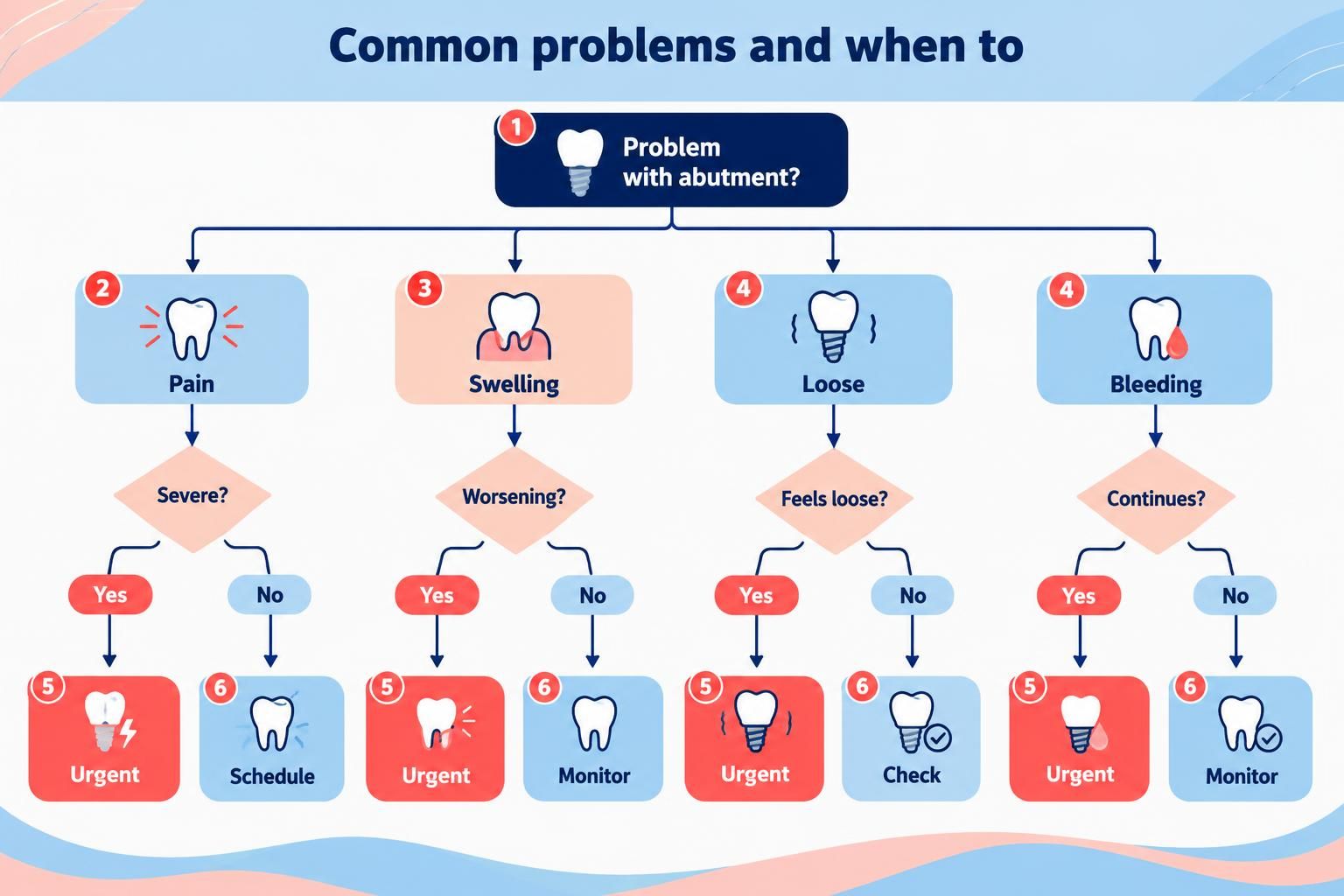
Common Problems and When to Call Your Dentist
A loose abutment, persistent bleeding, swelling, recession, worsening pain, or a bad taste can signal a problem. Do not try to tighten anything yourself. Call promptly if the abutment feels mobile, gum tissue looks more inflamed, pain worsens, or you notice pus, bleeding, infection signs, or a lost temporary crown.
Questions to Ask Before Your Crown is Attached
Before crown placement, confirm the abutment type, gum shape, bite plan, and cleaning instructions. Ask whether it is stock or custom, what material it uses, whether the crown is screw- or cement-retained, and what warning signs mean you should return sooner. Different tooth implant restorations use different support designs, so ask why this choice fits your case.