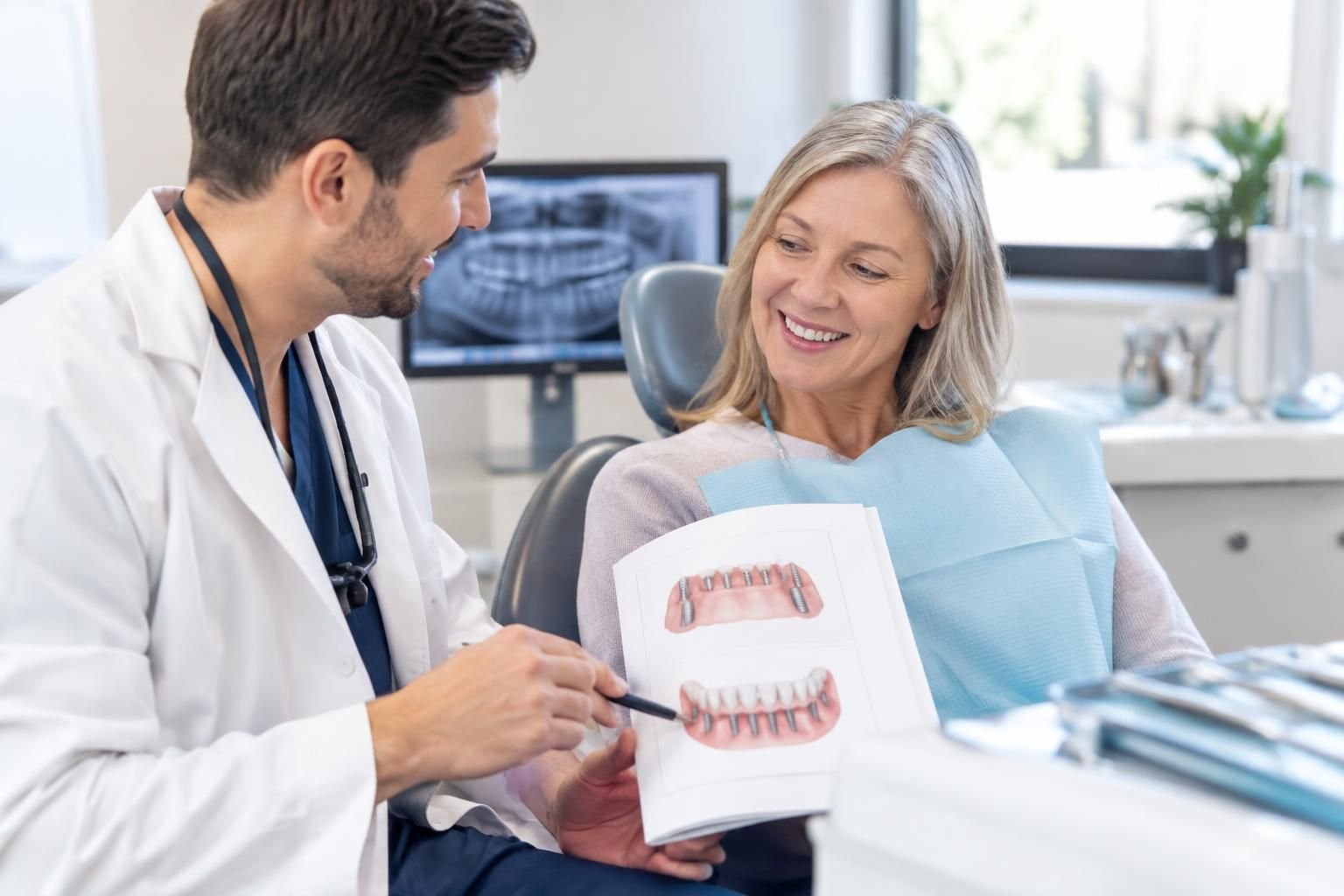
In the U. S., 3 on 6 dental implant cost is usually discussed per arch, not automatically for a full mouth. A typical planning range is about $25,000 to $45,000 for one arch, while both arches can land around $50,000 to $90,000 or more depending on surgery, materials, and add-on procedures. The big variable is scope: a straightforward upper arch is very different from a full-mouth case with extractions, bone grafting, sedation, and premium bridge materials.
Best for: People missing most teeth in an arch who want fixed bridges and have adequate bone support. Not ideal when: Active gum disease, uncontrolled medical issues, or heavy smoking make healing and implant stability unpredictable. Good first step if: You have a recent exam, CBCT scan, and itemized quote separating surgery from prosthetic costs. Call a pro if: Your quote changes after imaging, grafting is recommended, or you’re comparing 3 on 6 with All-on-4 options.
What 3 on 6 Dental Implants Are
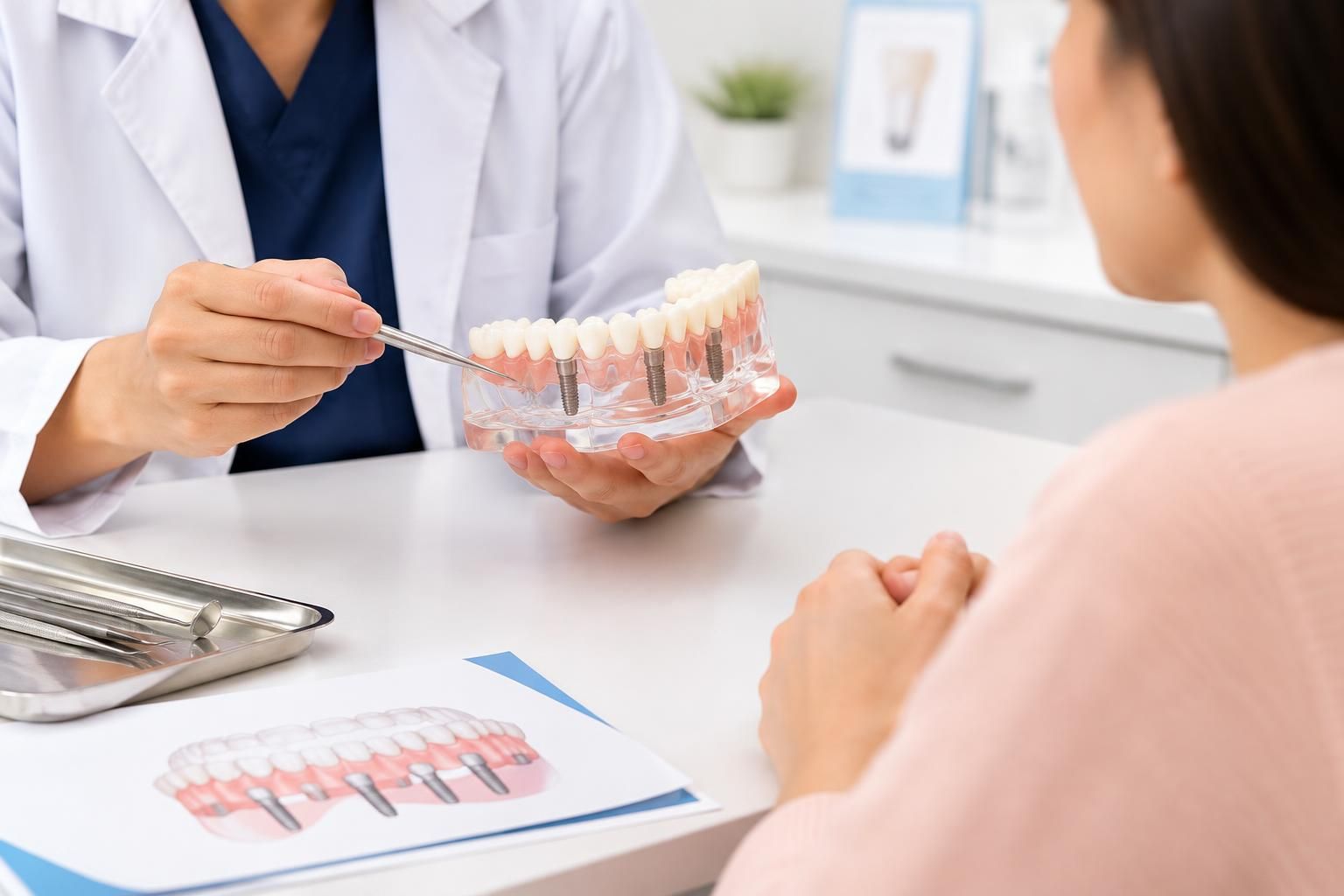
3 on 6 dental implants are a full-arch restoration that uses six implant posts to support three separate bridge sections. Instead of replacing every tooth with its own implant, the dentist places six implants strategically and attaches fixed bridges over them.
The “3” refers to the three bridge sections, and the “6” refers to six implants. Because the bridges are fixed, they do not come out like dentures. For a quick refresher, the basic dental implant parts include the implant post, abutment, and visible restoration. This design can feel more natural than removable dentures but requires enough bone, healthy gums, and precise bite planning.
Average 3 on 6 Dental Implants Cost in the United States
A realistic U. S. planning range for 3 on 6 dental implants is about $25,000 to $45,000 per arch, or roughly $50,000 to $90,000 or more for both arches. Lower quotes may leave out important items, while higher quotes may include scans, surgery, temporary teeth, the final bridge, and follow-up care.
Typical planning ranges include consultation and imaging at about $200 to $1,000, extractions at roughly $150 to $650 per tooth, bone grafting at about $500 to $3,000 per area, and sedation around $500 to $2,500. Implant surgery and the final porcelain or zirconia bridge are usually the largest costs. These are general planning ranges, not quotes. Actual pricing varies by market, provider, scope, oral condition, materials, parts, labor, and availability, so confirm a current estimate before treatment.
What Affects the Final Price
The final price depends on how much treatment is needed before the bridges can be supported safely. Imaging may reveal bone loss, infection, bite problems, or periodontal disease that changes the plan after the first estimate.
Quick quote-check list: confirm whether the price is per arch or full mouth, what temporary teeth are included, the final bridge material, sedation type, follow-up visits, and what triggers added fees after CBCT or surgery.
Major cost drivers include extractions, bone grafting, sedation, material choice, and lab work. Straightforward cases may need only implant placement, healing, abutments, and the final bridge. Complex cases may require staged surgery, temporary teeth, and more adjustments.
When comparing quotes, ask whether consultation, CBCT, planning, extractions, grafting, sedation, temporary teeth, final prosthesis, follow-up visits, and warranty terms are included. Also confirm what material is used and who places and restores the implants. Before you sign, bring implant consultation questions so you can compare the same scope across clinics.
3 on 6 vs All-on-4: Key Differences
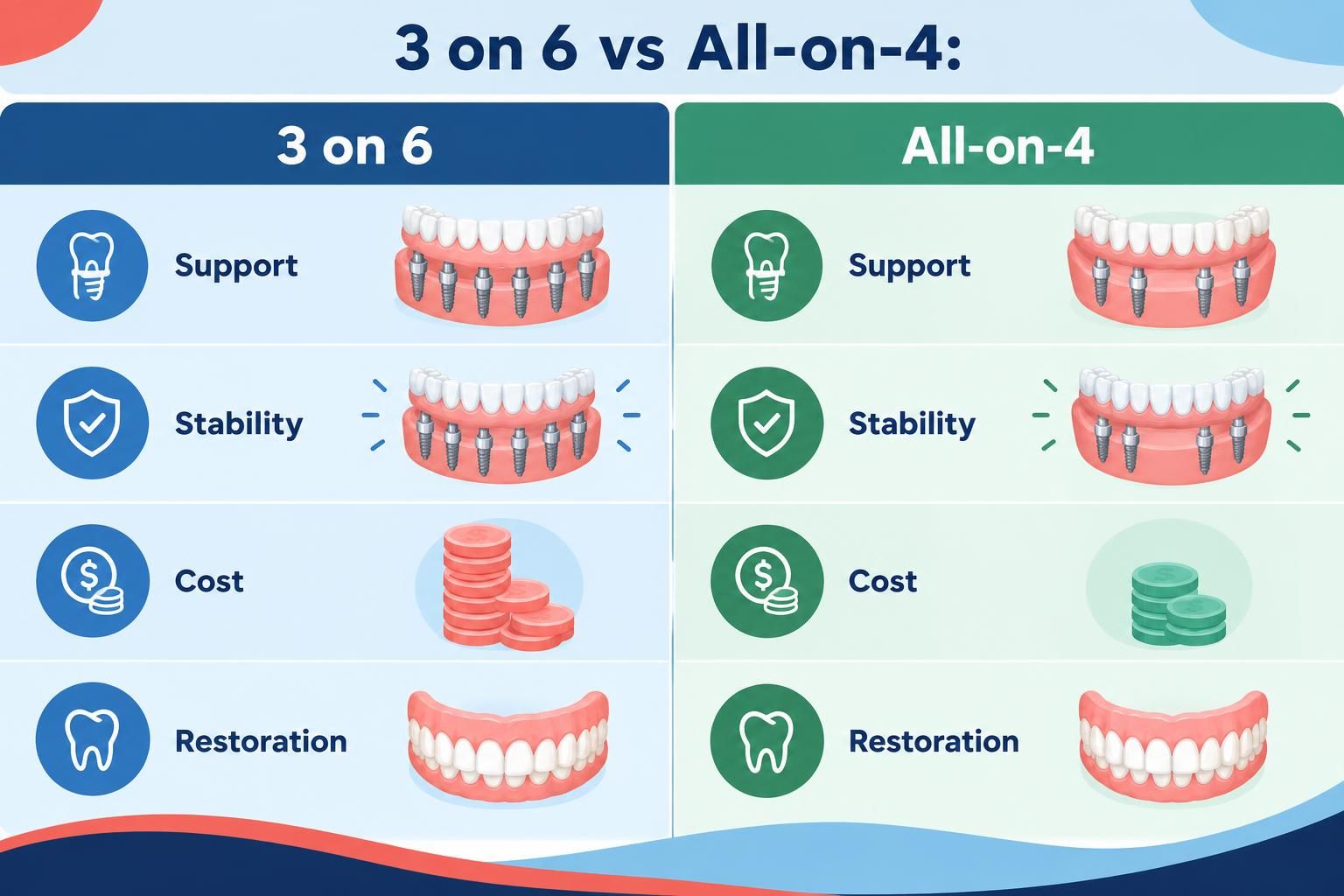
3 on 6 and All-on-4 are fixed full-arch options, but they differ in implant count, bridge design, cost, and candidacy. The right choice depends on your bone, budget, bite, esthetic goals, and maintenance commitment.
All-on-4 typically uses four implants to support a full-arch prosthesis, often as one continuous arch. 3 on 6 uses six implants and three bridge segments. That added support may appeal to some patients, but it can also require more bone, more planning, and a higher budget.
| Restoration | Implant support | Typical cost direction | Best fit |
|---|---|---|---|
| 3 on 6 | Six implants with three bridge sections | Often higher per arch | Patients wanting segmented bridges and broader support |
| All-on-4 | Four implants with one full-arch prosthesis | Often lower than 3 on 6 | Patients with limited bone or tighter budgets |
These are planning ranges, not guaranteed quotes. They reflect common provider and package patterns, and readers should verify current pricing, scope, deliverables, and market conditions before purchase.
These are planning ranges, not guaranteed quotes. Verify current pricing, scope, and deliverables before treatment.
If you have strong bone volume and want a segmented bridge design, 3 on 6 may offer appealing support and serviceability. If you have more jawbone loss, need a simpler surgical plan, or want a lower-cost fixed option, All-on-4 may make more sense.
Long-term value depends less on the system name and more on surgical accuracy, prosthetic design, hygiene access, follow-up care, and your health habits.
Insurance, Financing, and Payment Options
Dental insurance rarely covers the full cost of 3 on 6 implants, but it may help with parts of the plan, such as exams, extractions, periodontal treatment, anesthesia, or some prosthetic work. Implant posts are often excluded or limited.
Ask for a pre-treatment estimate, especially if more than one provider is involved. Check annual maximums, waiting periods, missing-tooth clauses, and medical necessity rules.
Financing can spread costs into monthly payments, but compare total cost, interest, fees, what is included, and when payments are due. If one quote seems far cheaper, confirm whether scans, sedation, temporary teeth, final bridges, follow-up visits, or complication care are excluded.
Procedure Timeline, Recovery, and Maintenance
The process usually takes multiple visits because planning, surgery, healing, and final restoration happen in stages. Common steps include consultation, imaging, treatment planning, any needed extractions or grafting, implant placement, healing, and final bridge delivery.
Recovery depends on the patient and the amount of surgery. Swelling, soreness, bruising, and temporary diet changes are common. Healing time matters because implants need to integrate with bone before full loading. If you’re comparing schedules, healing after implant placement explains why some cases take longer.
Maintenance must be consistent. Clean around and under the bridge at home and keep professional maintenance visits. Daily cleaning around dental implants helps lower inflammation and peri-implantitis risk.
Who is a Good Candidate and When to Consider Alternatives
A good candidate for 3 on 6 implants has missing or failing teeth in one arch, enough jawbone, controlled gum health, and medical stability for surgery. Age alone rarely decides candidacy. An older adult with good hygiene and controlled diabetes may qualify more easily than a younger heavy smoker with active gum disease.
Alternatives may be better if scans show major bone loss, untreated periodontal disease, poor bite alignment, or health issues that can delay healing. Smoking, uncontrolled diabetes, and poor plaque control also raise failure risk and should be managed first. If you’re unsure, discuss implant warning signs before treatment.
Possible alternatives include All-on-4, implant-supported dentures, conventional dentures, bone grafting before implants, or saving natural teeth when feasible. To judge cost, ask whether the quote is per arch or full mouth, what it includes, and what may change after imaging. If you qualify, 3 on 6 can be a strong fixed full-arch option.